Quality control
What quality control is
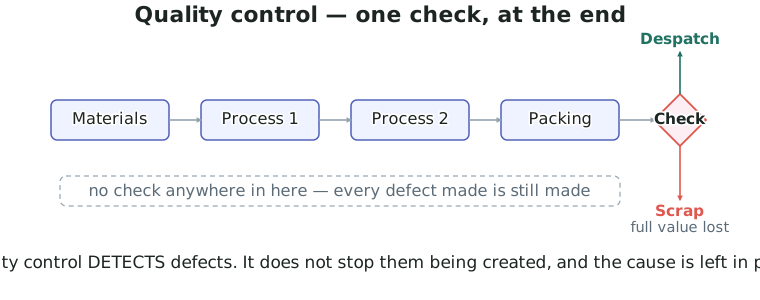
- Quality control (QC) checks the product after it has been made, and removes the items that do not meet the standard before they reach the customer.
- The check is done by inspectors — a separate role from the people who made the product.
- It is a detection system. It finds defects; it does not stop them being created.
- In practice QC usually means sampling: a proportion of each batch is tested, and if the sample fails the batch is held.
Advantages
- Cheap to set up. One trained inspector, or a small team, rather than training the whole workforce.
- Simple. Production staff carry on producing; nobody's job changes.
- Fast to introduce. A business can add an inspection point in days.
- A clear standard. One person applies one standard consistently, so the definition of "acceptable" does not drift between workers.
- Good enough where defects are cheap. If the product is low value and easy to remake, catching faults at the end is a rational choice.
Disadvantages
- Defects are still made, and still paid for. Everything spent on a faulty item before the inspection point is lost.
- Waste is at its most expensive. The fault is found in a finished product, when all the labour, materials and packaging have already gone in.
- The cause is not fixed. An inspector removes the item; nobody necessarily finds out why the machine, the material or the method produced it.
- It is only a sample. Faulty items in the parts of the batch that were not tested go out the door.
- It can damage motivation. Workers are not responsible for quality, so they have no reason to care about it, and being told by an inspector that your work is wrong is demotivating.
- Blame, not improvement. QC systems tend to generate arguments about whose fault a defect was, rather than changes to prevent it.
When quality control is the right choice
- The exam frequently asks you to explain a benefit of QC rather than an alternative system — so you must be able to argue for it, not just against it.
- QC suits a business where:
- the product is low value and cheap to scrap
- production volumes are high and margins thin, so training every worker is not affordable
- the workforce turns over quickly, so training investment is lost
- the business is small or new and cannot yet fund a full quality system
- the process is highly automated, so the operator has little influence on the outcome anyway
- It suits a business badly where a defect reaching a customer would be catastrophic — food safety, medical products, aviation parts — because sampling accepts that some defects get through.