How internal factors interact
The word the standard is built on
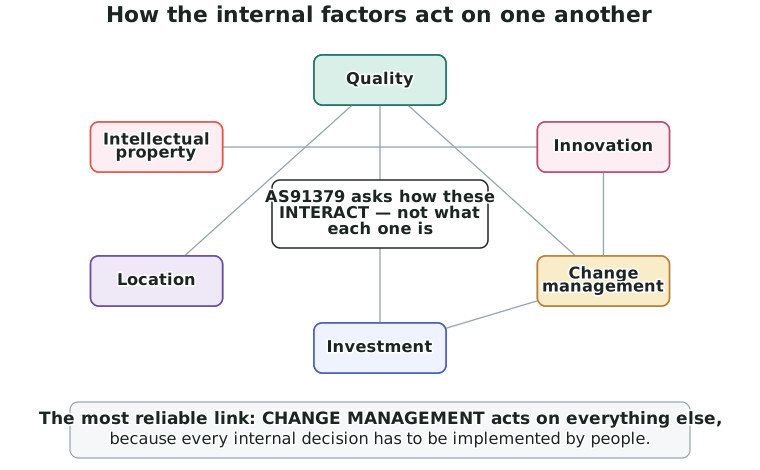
- The title of AS91379 is not "internal factors". It is how internal factors interact.
- Interaction means one factor changes the effect of another: quality depends on change management, innovation depends on culture, an investment's return depends on whether staff adopt it.
- A candidate who writes six separate paragraphs on six separate topics is answering a different standard. The interactions are what makes this a Level 3 question.
The interactions worth knowing
- Change management ↔ quality.
- Introducing quality assurance or total quality management is a change, so it fails for change-management reasons: no explanation of why, no training, no removal of the old way, no management follow-through.
- The reverse is also true: a business with a strong quality culture already has the habits — consultation, measurement, review — that make the next change easier.
- Culture ↔ innovation.
- Innovation is produced by people, so management's tolerance of failure decides how much of it there is. Punishing one failed project ends risk-taking for years.
- A quality culture that treats every deviation as a fault can suppress innovation, because innovation requires deviation. Managing both at once is a genuine tension.
- Investment appraisal ↔ change management.
- The savings that justified a machine only appear if staff use it as intended, so a project appraised on paper can under-deliver for entirely human reasons.
- This is a common reason real projects miss their forecast returns, and it is an excellent Excellence point.
- Innovation ↔ intellectual property.
- There is no point innovating if the result cannot be captured. Weak IP management means competitors take the benefit of the business's development spending.
- And the reverse: patenting publishes the invention, so protection can itself accelerate a competitor's innovation.
- Location ↔ quality and cost.
- Moving production offshore to cut costs typically increases the distance between management and the process, which makes quality harder to control — and can remove the provenance the price premium depended on.
- Quality ↔ investment.
- Better quality often requires capital: new equipment, new testing, new systems. So a quality decision is frequently an investment appraisal decision wearing different clothes.
Writing an interaction
- The shape that works:
- name both factors — "the move to total quality management (quality) depends on how the change is managed (management)"
- state the direction — which one acts on which
- explain the mechanism — what actually happens between them
- land on the goal — what the interaction does to profit, cost, reputation or survival
- Worked through:
- "Kea Ridge Merino's new quality system will only lower its waste costs if machinists actually stop and correct faults rather than passing them on. Whether they do depends on how the change was introduced: staff who were trained before the launch and shown why the system exists will stop the line, and staff who were simply told will not, because stopping the line makes their own output figures look worse. So the return on the quality investment is decided by the change management, not by the quality system itself — and a business that budgets for the equipment but not for the training will pay for the system and keep the waste."