Why change is resisted
Change management, and why the standard includes it
- Change management is the process of planning, introducing and embedding a change so that it actually works, rather than being announced and then abandoned.
- It is in this standard because change is where the three internal factors interact: a management decision, carried out by people, changing the business's functions.
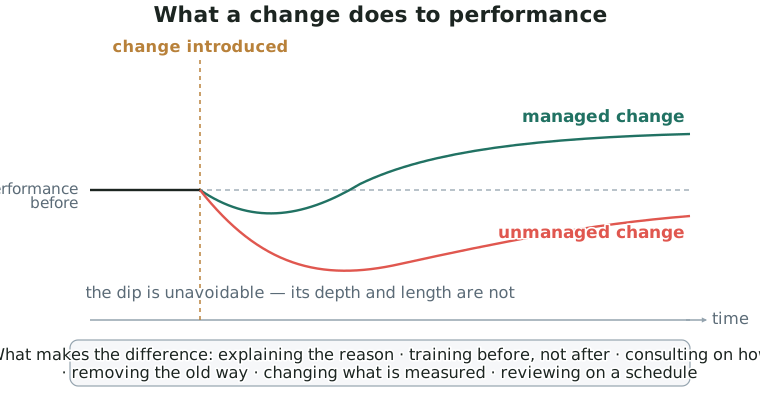
- The reason it needs managing is simple: the technical change is usually easy and the human change is usually hard. Installing new software takes a week. Getting people to use it properly takes a year.
Inertia
- Inertia is a business's tendency to keep doing what it has always done, even when conditions have changed. The teaching guide names it directly.
- Where inertia comes from:
- Sunk investment — expensive equipment, systems and training already paid for.
- Habit and routine — processes that nobody remembers deciding, and that work well enough.
- Structure — established departments and job descriptions that assume the old way.
- Success — a business that is doing well has the least urgency, and the most to lose.
- Size — the bigger the business, the more people must change at once.
- Inertia is not stupidity. It is often a rational preference for a known result over an unknown one.
Why individual employees resist
- Fear of losing their job. The most common and most rational fear, especially where the change involves automation or restructuring.
- Fear of not coping. Someone who is expert at the current way may be a beginner at the new way, which is a genuine loss of status.
- Loss of control or autonomy. New systems often mean more monitoring and less discretion.
- Loss of relationships. Restructuring breaks up teams people rely on.
- No understood reason. Change announced without an explanation looks arbitrary, and people resist arbitrary things.
- Distrust of management. If the last change was handled badly or promises were broken, the next one starts from a deficit.
- Change fatigue. Too many changes too quickly and staff stop engaging with any of them.
- Extra work now for a benefit later. The costs of change fall on staff immediately; the benefits usually arrive later and often to the business rather than the individual.
Why resistance costs the business money
- Productivity falls during and after the change, and falls further if staff are working around the new system rather than with it.
- The change fails quietly. Staff comply on paper and continue the old way in practice, so the business pays for the change and gets none of the benefit.
- Key staff leave, taking knowledge with them at exactly the moment it is needed.
- Industrial action where the change affects pay, hours or job security — a particular risk for a global business whose employment terms differ between countries.
- Customers notice. Service quality dips while the business argues with itself.