Quality assurance
What quality assurance is
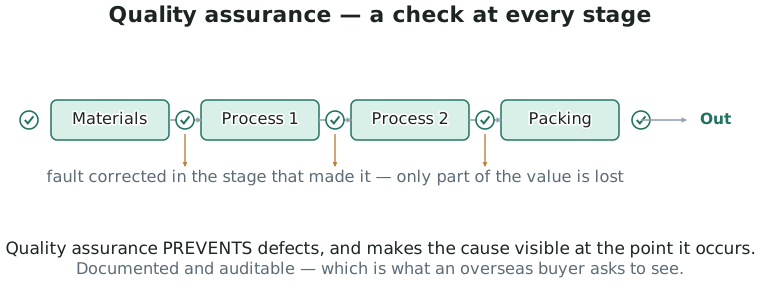
- Quality assurance (QA) builds the check into every stage of the process, so a fault is caught by the person who created it, at the point it happens.
- It is a prevention system. The aim is that a defect never reaches the next stage, let alone the customer.
- QA works through agreed standards and documented procedures: each stage has a defined standard, the worker at that stage checks against it, and the check is recorded.
- Certification schemes such as ISO 9001 are quality assurance made formal and auditable, which is why exporters often hold one — it is evidence a buyer can inspect.
Advantages
- Faults are caught early, when only part of the value has been added, so the cost of each defect is far lower.
- Waste falls, which lowers the cost of production per unit.
- The cause is visible. Because the check happens at the stage that created the fault, the business can see which machine, material or method is responsible and fix it.
- Responsibility sits with the worker, which tends to raise care and job satisfaction — people take more pride in output they are trusted to judge.
- It is auditable. Documented procedures and records are exactly what an overseas buyer, a regulator or a certifying body wants to see, so QA can open markets that QC cannot.
- Consistency across sites. A documented standard travels — useful when a business manufactures in more than one country.
Disadvantages
- Expensive to introduce. Every worker has to be trained, standards have to be written, and records have to be designed and kept.
- Slower, at least at first. Checking at every stage adds time to the process, so output per hour falls while people learn.
- Paperwork. Documentation and audit take time that is not spent producing.
- It depends on people following it. A documented procedure that workers skip under pressure gives false confidence — the records say the check happened.
- Resistance. Staff who have never been responsible for quality may see the change as extra work, or as a criticism of how they have always worked. This is a change management problem as much as a quality one.
Quality control and quality assurance compared
| Quality control | Quality assurance | |
|---|---|---|
| When the check happens | After production | During production, at every stage |
| Who checks | Inspectors | The worker doing the job |
| Aim | Detect defects | Prevent defects |
| Cost to set up | Low | High |
| Cost of each defect | High — a finished unit | Low — partly finished work |
| Does the cause get fixed? | Not necessarily | Usually, because it is visible |
| Effect on staff | Can demotivate | Usually raises responsibility |
| Evidence for buyers | Little | Documented and auditable |