Tall and flat structures
Tall structures
- A tall structure has many levels of management and a narrow span of control at each level.
- An instruction from the chief executive passes through several managers before it reaches the person doing the work.
- Typical of large, established organisations where consistency and supervision matter — hospitals, government departments, banks.
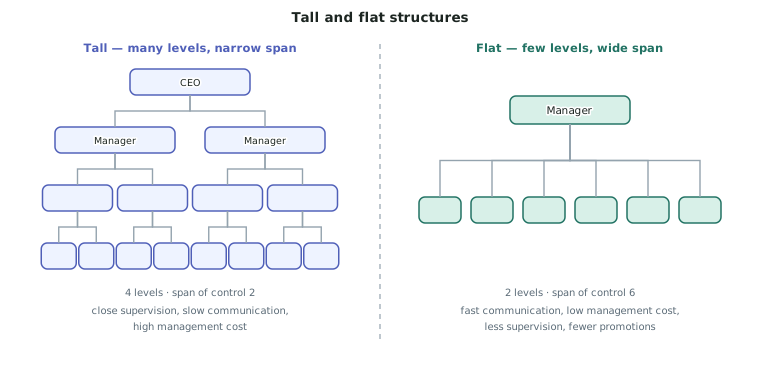
| Advantages of a tall structure | Disadvantages of a tall structure |
|---|---|
| Close supervision — each manager has few staff, so problems are noticed early | Communication is slow, and messages are distorted as they pass through levels |
| Clear promotion path, which motivates staff and helps retain them | High management costs — many managers, each on a manager's salary |
| Roles and responsibilities are clearly defined at each level | Decisions take longer, so the business responds slowly to competitors |
| New or unskilled staff get the support they need | Staff lower down have little authority, which can demotivate capable people |
Flat structures
- A flat structure has few levels of management and a wide span of control.
- One manager supervises many staff, and front-line employees are much closer to the decision-maker.
- Typical of smaller businesses, technology firms, and any business that has "delayered" to cut costs.
| Advantages of a flat structure | Disadvantages of a flat structure |
|---|---|
| Fast communication — few people between the decision and the action | Managers can be overloaded, with too many staff to supervise properly |
| Lower management costs, because fewer managers are employed | Fewer promotion opportunities, so ambitious staff may leave |
| Staff have more responsibility and autonomy, which can motivate them | Less supervision, which is risky where work must meet strict standards |
| The business can react quickly to a change in the market | Managers may become generalists stretched across too many tasks |
Delayering
- Delayering is removing one or more levels of management from a structure — usually middle management.
- Done to cut costs and speed up decisions, it turns a tall structure into a flatter one.
- The costs of delayering are real: redundancy payments, loss of experienced people, a wider span for the managers who remain, and damaged morale among survivors who now report to someone with less time for them.
Choosing between them
- The question is never "which is better" — it is which suits this business.
- A tall structure suits a business where:
- mistakes are expensive or dangerous, so work must be checked
- staff are new, seasonal or unskilled and need direction
- the same standard must be delivered at every site
- A flat structure suits a business where:
- staff are experienced professionals who do not need supervising
- the market changes fast and slow decisions lose sales
- management cost is a large share of total cost