Matrix and shamrock structures
The matrix structure
- A matrix structure organises people into project teams that cut across the usual departments.
- Each employee has two reporting lines:
- a functional manager — the head of their specialism (marketing, finance, engineering)
- a project manager — the person running the project they are currently working on
- The business is arranged as a grid: functions down one side, projects across the top.
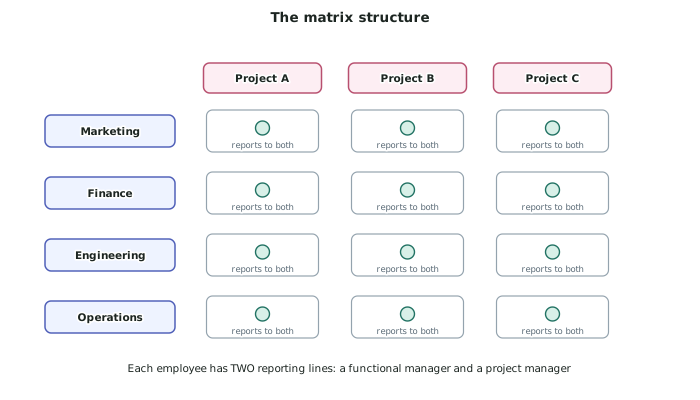
- Used where the work arrives as distinct projects needing a mix of skills: construction firms, film and television production, engineering consultancies, product development in a large manufacturer.
| Advantages of a matrix structure | Disadvantages of a matrix structure |
|---|---|
| Brings together the exact mix of specialists a project needs | Two bosses means conflicting instructions and competing priorities |
| Specialists share knowledge across departments, improving problem-solving | Decisions can be slow because two managers must agree |
| Flexible — teams are formed and dissolved as projects start and finish | Staff can feel stressed and pulled between competing demands |
| Staff develop broader skills by working outside their own department | Duplicated meetings and reporting raise administrative costs |
The shamrock structure
- The shamrock structure is named after the three-leaf clover: the workforce is split into three groups, and each is employed on different terms.
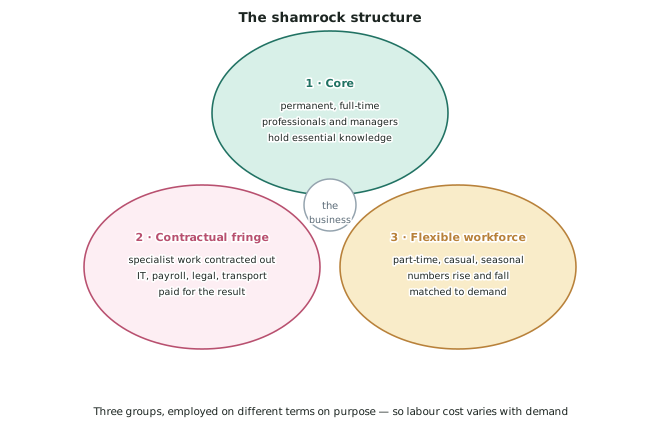
Leaf one — the core.
- Permanent, full-time, well-paid professionals and managers who hold the business's essential knowledge.
- They are expensive, and the business keeps them because losing them would damage it.
Leaf two — the contractual fringe.
- Specialist work contracted out to other businesses or self-employed contractors: IT support, payroll, legal advice, cleaning, transport.
- Paid for the result, not the hours; no permanent employment obligations.
Leaf three — the flexible workforce.
- Part-time, casual, temporary and seasonal staff brought in to match demand — extra checkout operators before Christmas, pickers during harvest.
- Numbers rise and fall with the work.
| Advantages of a shamrock structure | Disadvantages of a shamrock structure |
|---|---|
| Labour costs vary with demand instead of being fixed all year | Peripheral staff feel less loyal, so turnover and training costs rise |
| Specialist work is bought from experts without employing them permanently | Quality and consistency are harder to control across contractors |
| The core team stays small, so overheads are lower | The business becomes dependent on contractors it does not control |
| The business can scale up quickly for a busy season | Core staff carry a heavy workload and can burn out |
Choosing between them
- A matrix answers the question "how do we get the right skills onto this project?"
- A shamrock answers the question "how do we avoid paying for staff we do not need all year?"
- Both are chosen for flexibility, and both pay for it in control — matrix in conflicting authority, shamrock in weaker commitment from the people doing the work.