Distribution and supply chain problems
What the guide says the paper will set
- The guide names distribution problems from the use of intermediaries and from language or cultural barriers. The 2025 paper set port congestion, warehouse location and stock unavailability across European stores.
The supply chain of a New Zealand exporter
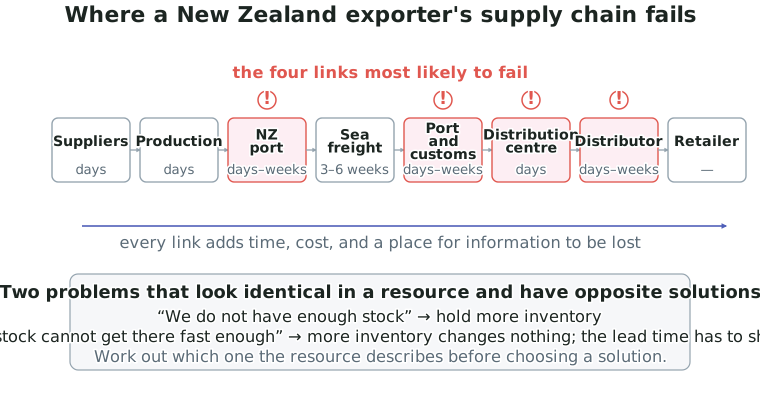
- Understanding the links makes the causes obvious, because a problem is always at a link:
- suppliers → production → New Zealand port → sea or air freight → destination port and customs → distribution centre → distributor or wholesaler → retailer → consumer
- Each link adds time, cost and a place where things can go wrong. New Zealand's distance means the whole chain is longer than a competitor's inside the destination market — a structural disadvantage the business has to manage rather than remove.
Typical causes
- Port congestion. Too many ships and not enough berths or labour, so containers wait. It affects both ends and the business controls neither.
- Distance from the distribution centre to the market, adding days to every replenishment.
- Too many intermediaries. Each one adds margin, time and a point where information is lost.
- Poor demand forecasting, so the wrong stock is in the wrong place.
- Customs and compliance delays — documentation errors, labelling that does not meet local rules, inspections.
- Language and cultural barriers between the business and its distributors, so problems are not reported until they are large.
- A single route or single carrier, so one disruption stops everything.
- Perishability, where delay does not just postpone the sale but destroys the product.
Effects to trace
- Lost sales where stock is not on the shelf when the customer wants it.
- Market share, if it repeats and retailers reallocate space.
- Cash tied up in stock sitting in transit or in the wrong warehouse.
- Higher costs — expedited freight, storage, write-offs.
- Relationship damage with distributors and retailers who bear the consequence.
Solutions to have ready
- Relocate or add a distribution point closer to the markets that are underserved.
- Hold more stock closer to the customer — expensive and it ties up capital, but it absorbs disruption.
- Reduce intermediaries — sell direct to the retailer, or direct to consumers online.
- Use more than one port, carrier or route.
- Change freight mode for high-value or urgent goods — air freight costs far more but removes weeks.
- Improve forecasting and information sharing, so stock is positioned where demand actually is.
- Appoint an in-market agent who can act on problems in the local language and time zone.
- Cost every one of them: a second distribution point is capital plus ongoing rent and staff; more stock is capital plus obsolescence risk; air freight is a permanent margin reduction.