Tracing the effects
Why "multiple ways" is in the definition
- The standard defines a complex problem as one that affects the business in multiple ways. The effects sub-parts are where you show that.
- The paper names the thing it wants the effect on — profit, market share, reputation, cash flow, economic sustainability. Answer about that one. An excellent paragraph about the wrong target earns nothing.
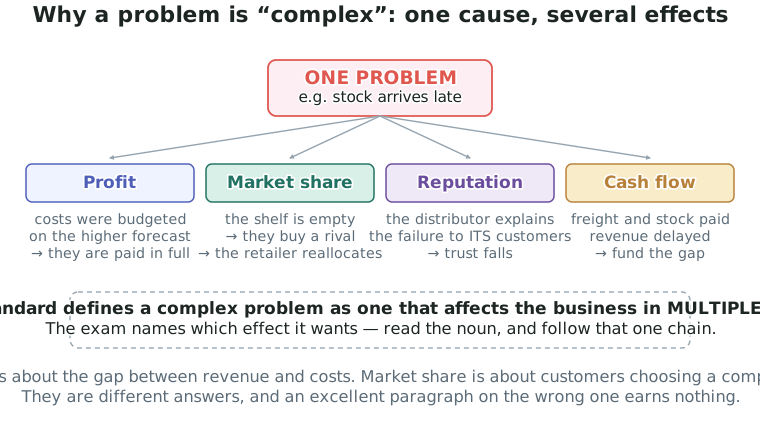
The main effect chains
- Learn these four chains and you can build an effect answer for almost any problem the paper sets.
- Effect on profit.
- Costs rise, or revenue falls, or both → the gap between revenue and costs narrows → profit falls.
- The strong version explains why the costs were fixed: budgets for freight and marketing were set on a forecast sales volume, so when volume falls short those costs are still paid in full.
- Effect on market share.
- The customer cannot get the product, or is dissatisfied → they buy a competitor's product → if it happens repeatedly they switch permanently → the business's share of the market falls, and winning a lost customer back costs more than keeping them would have.
- Effect on reputation.
- The failure is experienced by a customer or a distributor → they tell others, or leave a review → future customers hesitate → the business must spend more on marketing or discount to achieve the same sales.
- Effect on cash flow.
- Money goes out before it comes in — stock is bought, freight is paid, staff are paid — and the revenue that was supposed to cover it does not arrive on time → the business has to fund the gap from reserves or borrowing → interest costs rise and less is available for anything else.
Making an effect answer reach Merit
- Merit requires awareness of impact: how the effect touches a business or stakeholder goal.
- Three moves that reliably do it:
- Say what it does to a number. Not "profit falls" but "profit falls while the freight and marketing costs budgeted against the higher forecast are still incurred in full".
- Say whether it is temporary or permanent. A stock-out today loses a sale; repeated stock-outs lose a customer.
- Name the stakeholder. The distributor, the retailer, the consumer, the staff, the shareholders — each is affected differently and the paper often asks for one specifically.
Second-order effects
- The best answers show the effect spreading, which is what makes the problem complex:
- a quality failure damages reputation and costs the price of the scrapped stock and takes management time away from the launch it was working on
- a supply delay loses sales and damages the distributor relationship and leaves capital tied up in stock sitting in the wrong place
- an industrial dispute raises wage costs and interrupts production and becomes public, affecting the brand
- You do not need all of these in one answer — the paper asks for one effect at a time. But knowing them is what lets you pick the strongest one.