Staffing needs analysis and recruitment
Workforce planning
- Workforce planning is working out what people the business will need — how many, with what skills, when — and how it will get them.
- It is planning because the answers take time to deliver. A skilled role can take months to fill and years to train, so a business that only thinks about staffing when someone resigns is always behind.
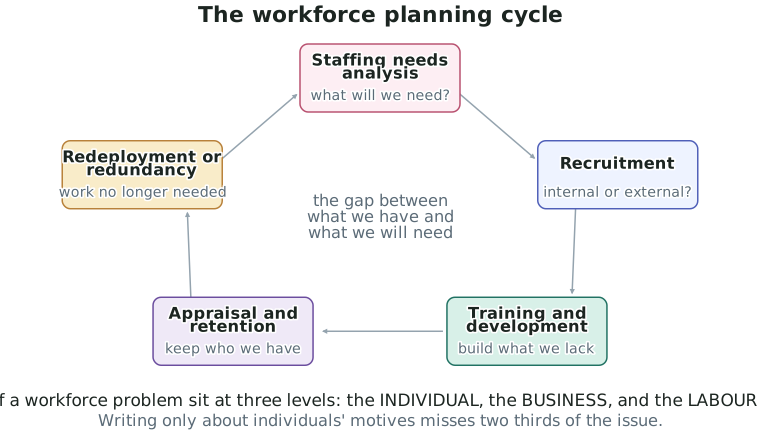
Staffing needs analysis
- The gap between the workforce the business has and the workforce it will need.
- What it has: headcount, skills, ages, contracts, hours, and who is likely to leave.
- What it will need: driven by the business plan — growth, a new product, a new market, new technology, a change in how the work is done.
- The gap can be a shortage, a surplus, or a mismatch — the right number of people with the wrong skills, which is the case new technology usually creates.
- Things a good analysis notices:
- Age profile. A team where several key people retire within three years is a shortage that has not happened yet.
- Single points of failure. One person who is the only one who can do something.
- Seasonality. A workforce that must double for six weeks and then shrink.
- Turnover patterns. Which roles churn, and how long people stay.
Filling the gap
- Recruitment is only one of four options, and the exam-worthy analysis considers all of them:
- Recruit — bring in new people.
- Train — develop the people already there into the roles needed.
- Redeploy — move people from where they are no longer needed to where they are.
- Restructure the work — automate it, contract it out, or redesign the job so it needs different or fewer people.
Recruitment
- Internal recruitment — filling the role from existing staff.
- Cheaper and faster; the person is known and already understands the business; it creates a visible career path, which helps retention.
- But it leaves a vacancy behind, brings in no new ideas, and can create resentment among those not chosen.
- External recruitment — hiring from outside.
- Brings new skills, experience and perspective, and a wider field to choose from.
- But it is slower and dearer, the person takes time to become effective, and the hire may not work out.
- The steps: define the role → write the job description and person specification → advertise where the right people are → shortlist → interview and test → check references → make the offer → induct.
- Where recruitment goes wrong, and where the causes of a staffing issue usually sit:
- The advertisement describes the employer's wishes, not the job, so the wrong people apply.
- The process is too slow. In a tight labour market, a good candidate has another offer within a fortnight.
- The person specification is unrealistic — a list of every desirable quality, which no available person has.
- Induction is skipped, so the new person is left to work it out and leaves within months.
- The business recruits for experience when it could recruit for potential and train, which is often the only realistic option in a skill shortage.